
THE NACREALIA CUP SYSTEM
One cup.
Four coordinated functions.
Nacrealia is not a single “miracle coating”. It is a transparent product architecture in which body, mineral barrier, rim and lid are designed together—then validated separately.
Independent concept for material evaluation. Reference photography illustrates the cold-beverage experience and does not depict a finished Nacrealia prototype.

THE EXPERIENCE MUST REMAIN
01
See the beverage
Transparency remains part of selection, anticipation and enjoyment.
02
Trust the closure
Cup, rim and lid must behave as a single secure mechanical system.
03
Protect store rhythm
Stacking, de-nesting, filling and closure must suit real service speed.
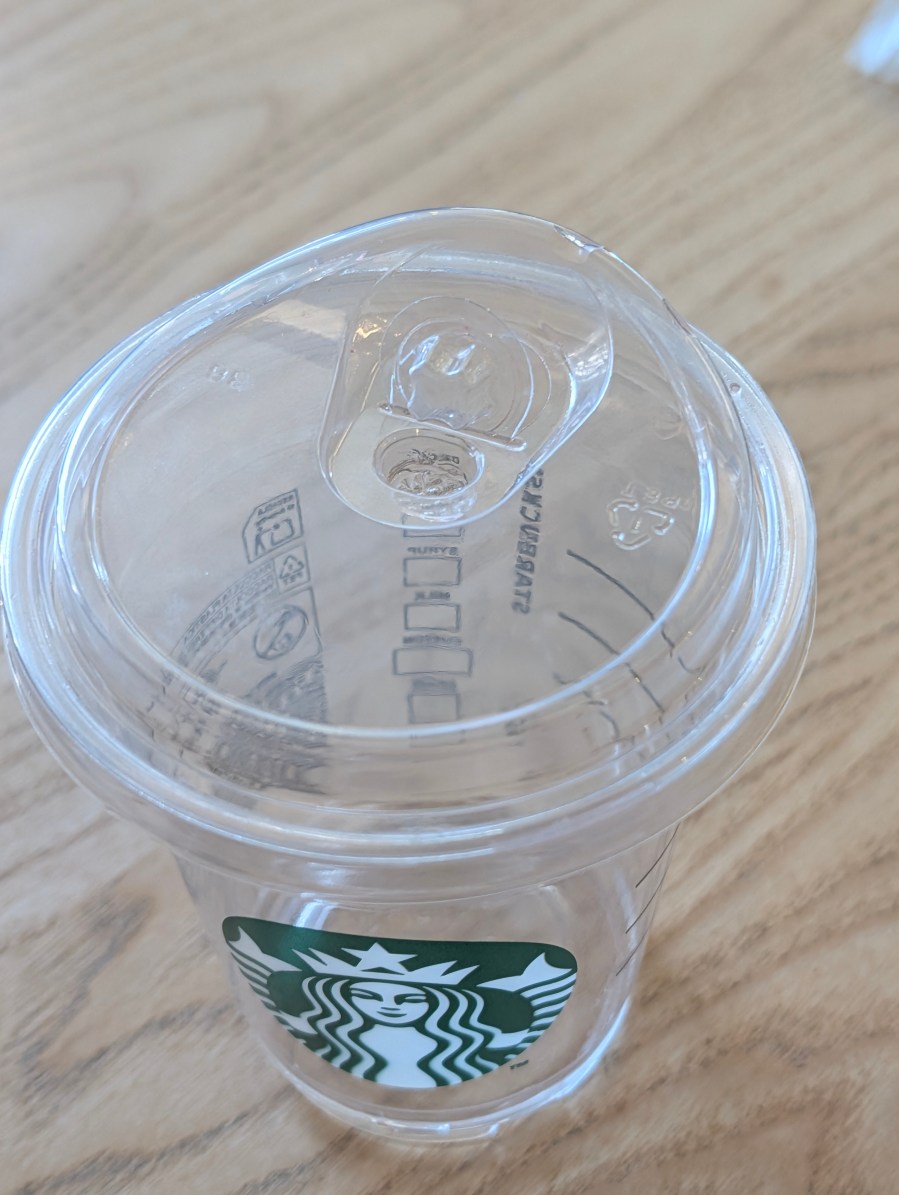
DESIGN OBJECT
The system must read as one clear object.
The engineering brief is deliberately familiar: transparent wall, reinforced rim, low-profile closure and controlled drinking geometry. The difference lies in how those functions are delivered.
Design target, not a performance claim.
Every feature remains tied to a measurable validation gate.
SCROLL-LED ARCHITECTURE
Built from the rim down.
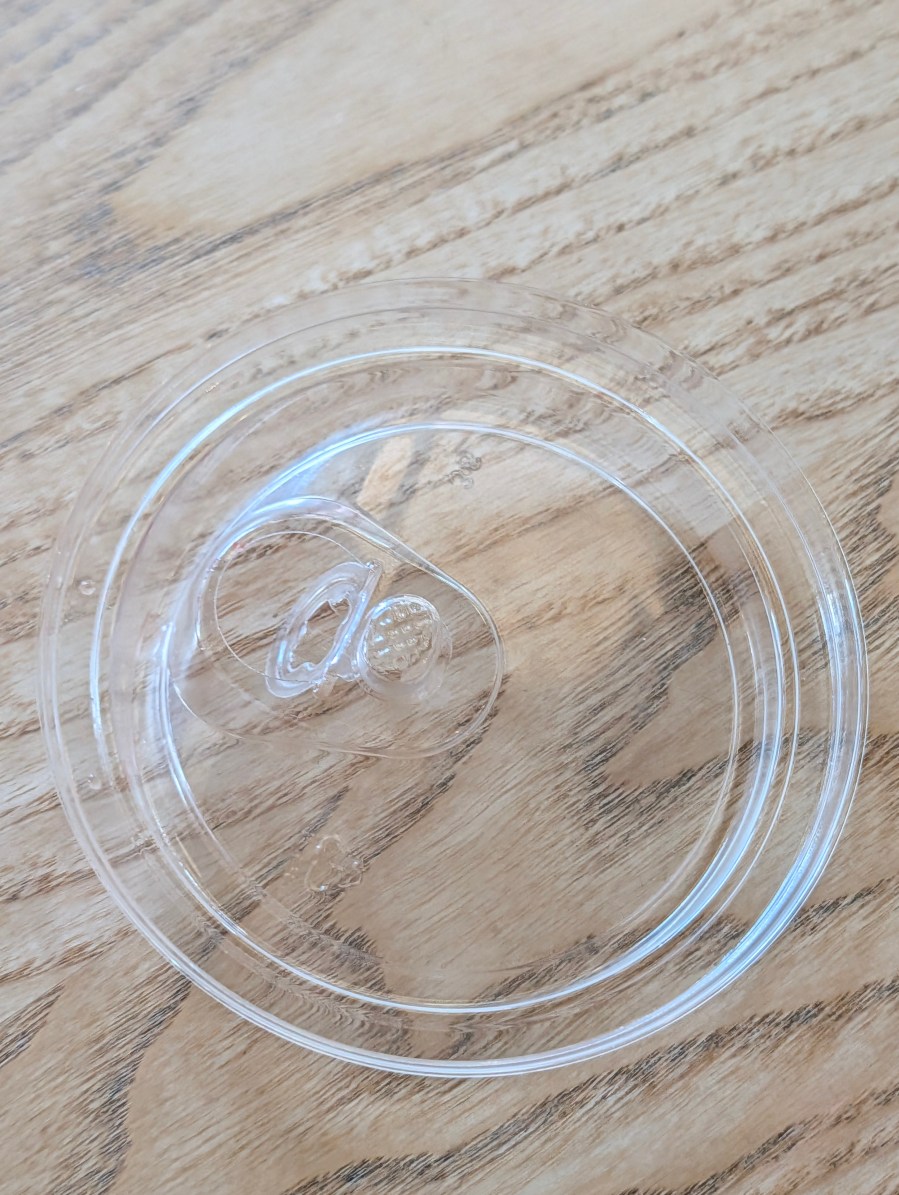
01 • TRANSPARENT LID
Controlled drinking geometry
A shaped regenerated-cellulose lid with a raised drinking platform and controlled anti-splash aperture.
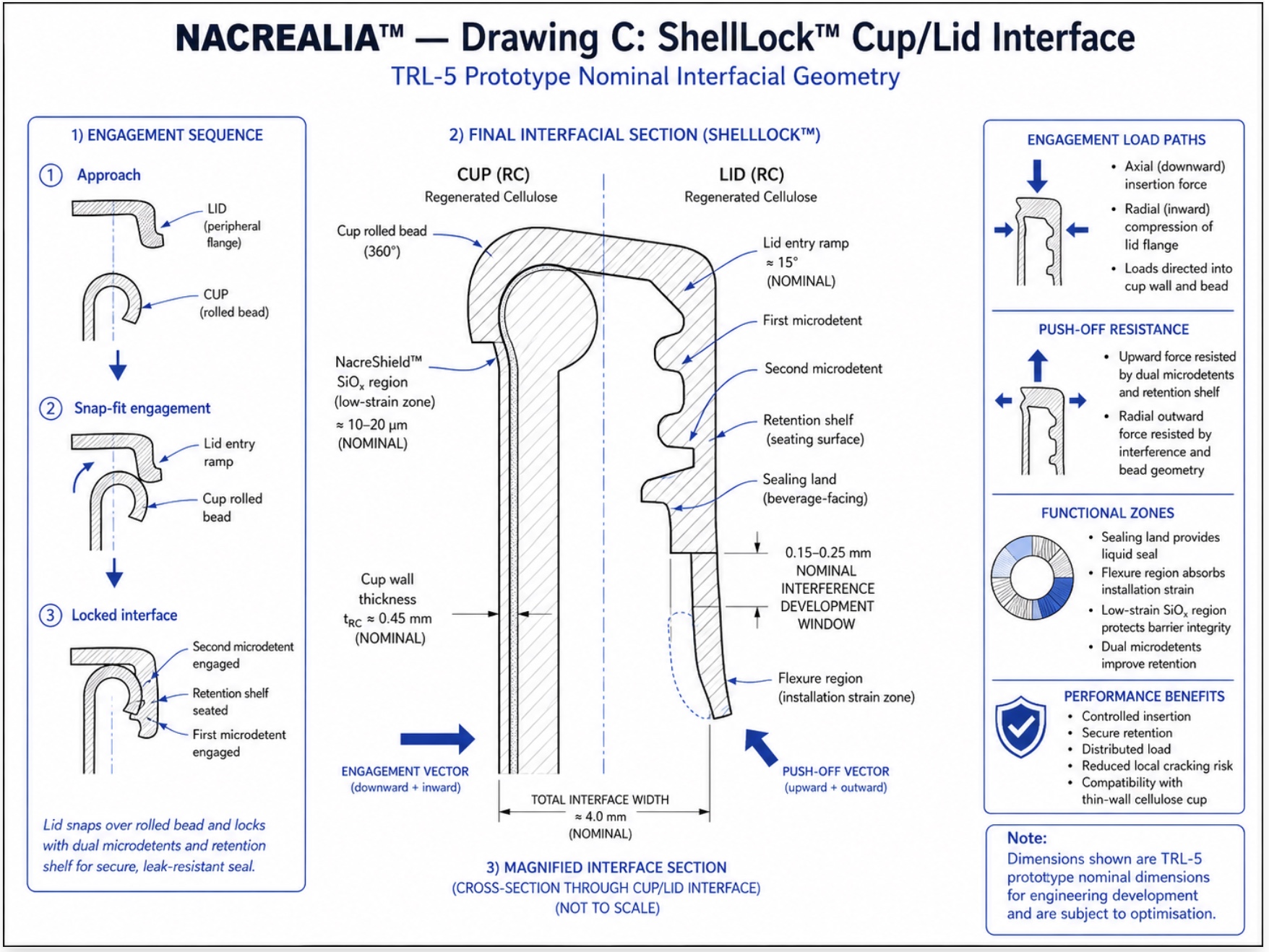
02 • SHELLLOCK™ SKIRT
Mechanical retention
Segmented folded geometry engages beneath the rim through controlled interference, reducing the strain demanded of a conventional polymer snap-fit.
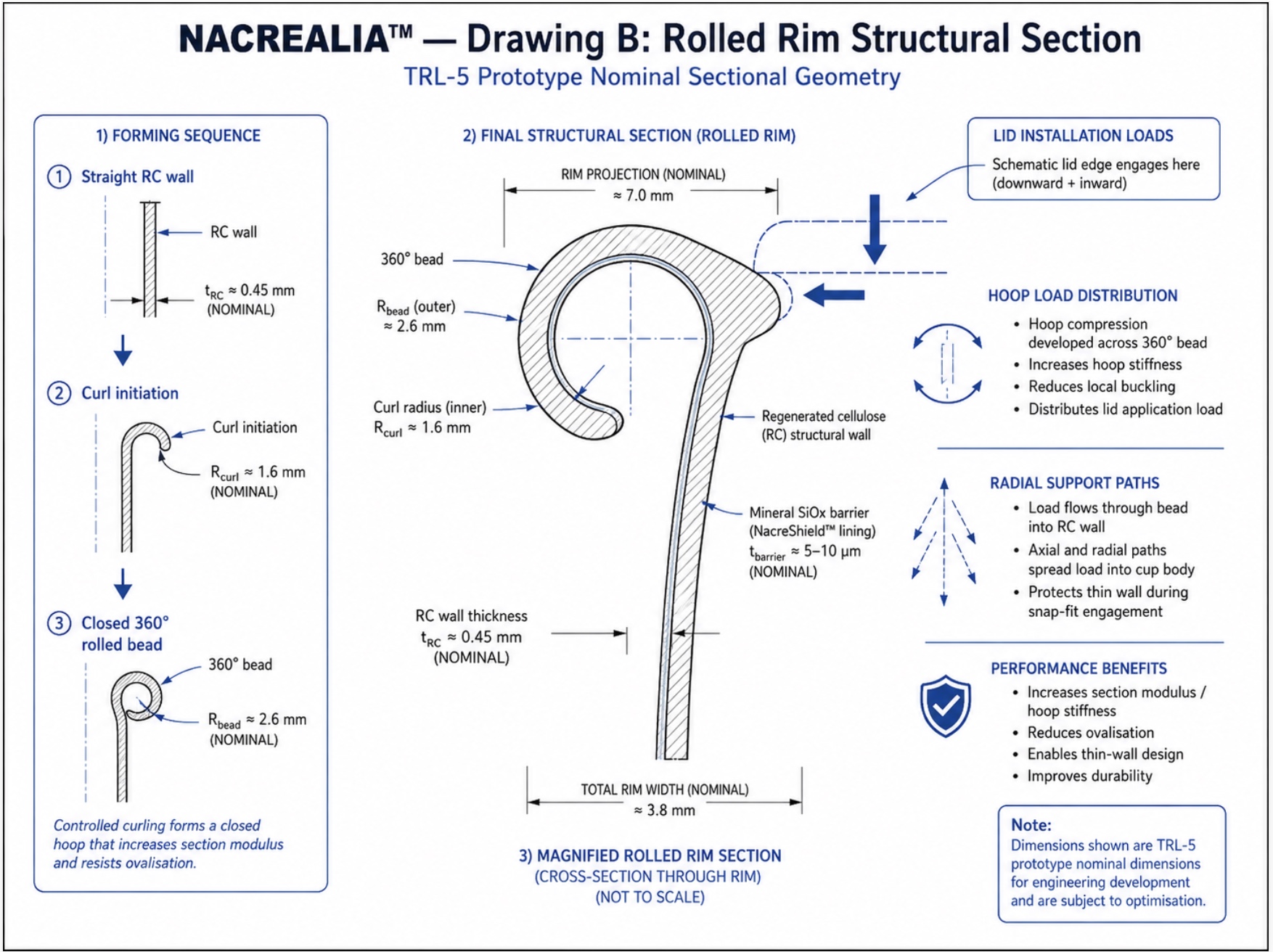
03 • REINFORCED ROLLED RIM
Local stiffness and repeatability
A strengthened bead provides hoop stiffness, dimensional control and the retaining surface for the lid.
04 • TRANSPARENT CUP BODY
The load-bearing shell
Oriented regenerated cellulose supplies the principal structural wall while preserving beverage visibility.
BEVERAGE FIRST
Changing the material should not change the ritual.
Clarity, grip, cold hold and closure confidence remain the visible experience. The material architecture works quietly beneath it.
MATERIAL STACK
Structure inside. Mineral protection at the surface.
01
Oriented cellulose
Transparent regenerated cellulose provides the shaped structural shell.
02
Post-forming SiOₓ
An ultrathin predominantly inorganic mineral barrier is deposited on the beverage-facing surface after forming.
03
Protected interfaces
Adhesion, uniformity and resistance to handling remain explicit validation gates.
Depositing SiOₓ after dimensional stabilisation protects the brittle mineral layer from the large strains used to shape the cup while preserving optical clarity.
Engineering principle: use the least barrier material capable of passing the defined containment test.
MANUFACTURING LOGIC
Designed around controlled conversion.
Prepare the transparent cellulose sheet
Form the cup and lid geometry
Dry under constraint to stabilise shape
Deposit the post-forming SiOₓ barrier
Complete rim and ShellLock™ architecture
Inspect, stack and validate the system
The route remains a development hypothesis to be tested for forming damage, barrier continuity and commercial line speed.
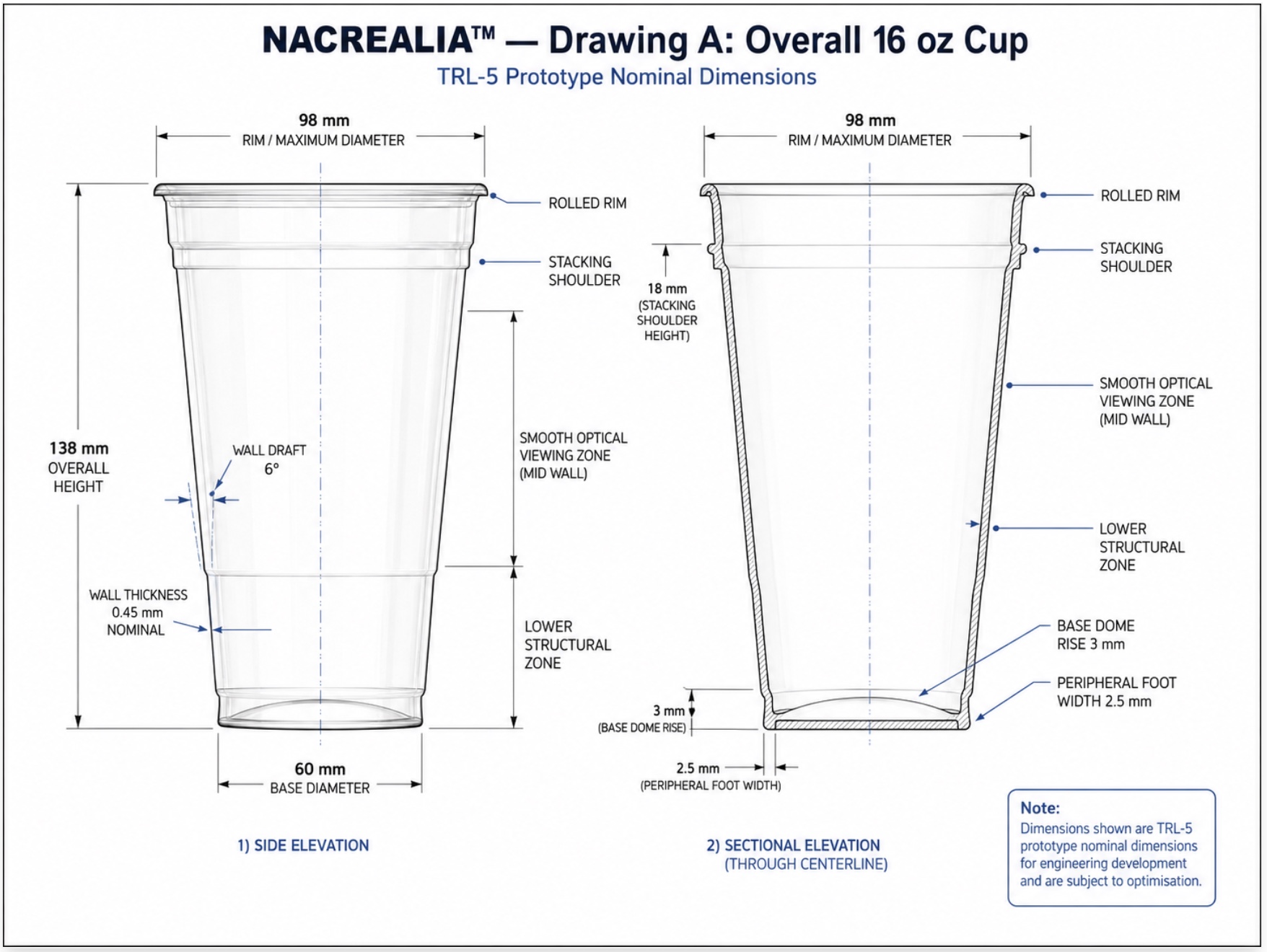
PROTOTYPE ENGINEERING DRAWING SET · A–D
The cup architecture, made inspectable.
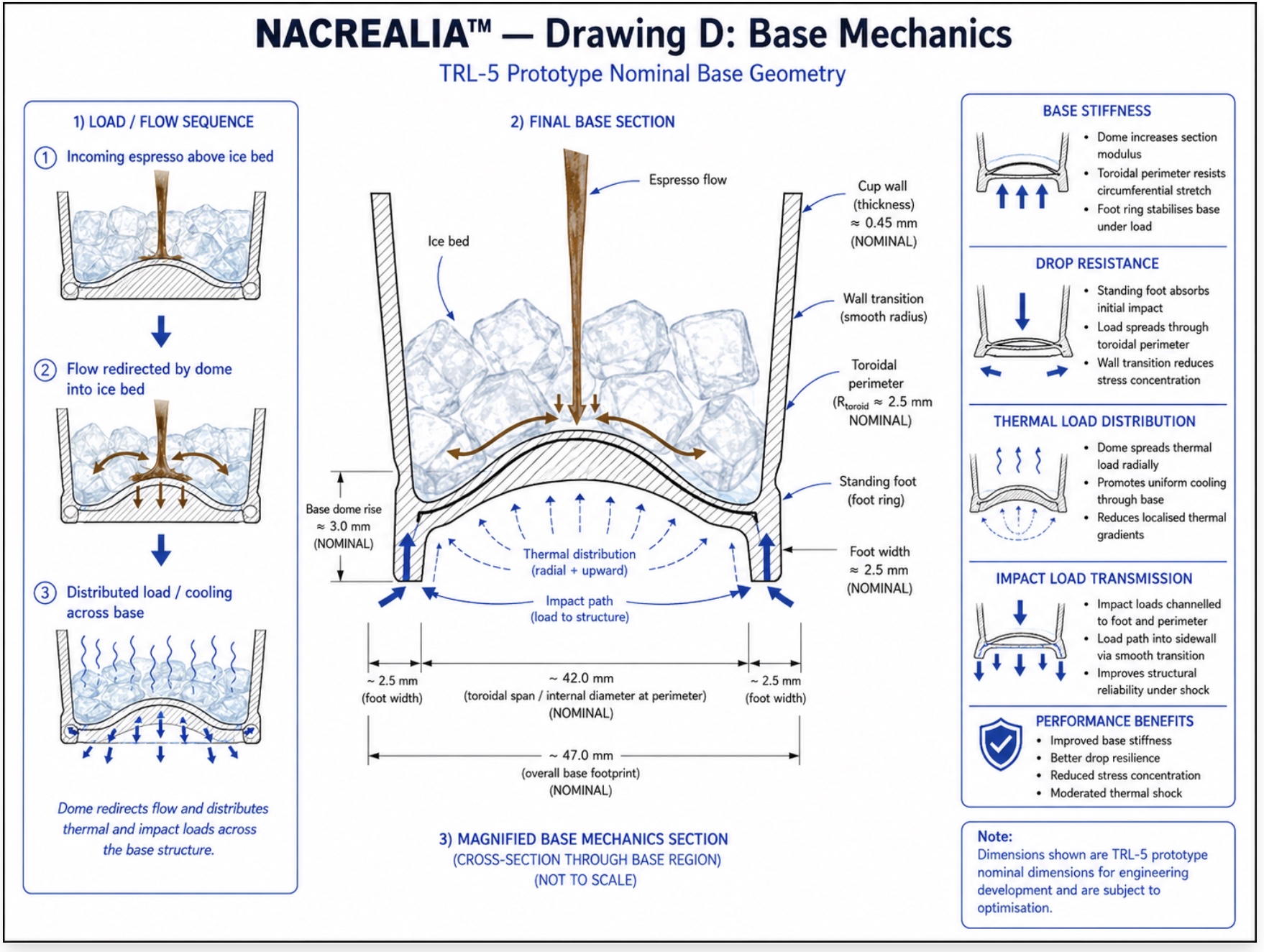
Four nominal TRL-5 geometry studies translate the concept into dimensions, load paths and functional interfaces. Select any drawing to inspect the full-resolution image.
EVIDENCE BEFORE CLAIMS
A credible concept must expose what could make it fail.
Clarity loss, SiOₓ microcracking, coating non-uniformity, flavour taint, weak wet stiffness, lid disengagement and slow conversion are treated as explicit engineering risks.

